An EEBD (emergency escape breathing device) is a supplied-air or oxygen hood or face piece that gives a crew member at least 10 minutes of breathable air to get out of a smoke-filled or toxic space. It is an escape device only. SOLAS chapter II-2, regulation 13 requires every ship it covers to carry at least two EEBDs in the accommodation spaces, more on passenger ships, a set inside the machinery spaces placed by the layout of the space, and spares on top. The crew checks the gauges weekly, and the units are checked annually to the manufacturer's instructions.
This guide puts the carriage rules, the placement rules and the maintenance checks in one place, then lists what tends to go wrong when a Port State Control examiner or class surveyor walks the engine room in Baltimore, Philadelphia, Wilmington, New York and New Jersey, or Norfolk.
What counts as an EEBD, and what it is not for
The IMO guidelines for EEBDs, MSC/Circ.849, define the device as "a supplied-air or oxygen device only used for escape from a compartment that has a hazardous atmosphere," and say it "should be of approved type." SOLAS requires EEBDs to comply with the Fire Safety Systems (FSS) Code. Circ.849 sets out the basic particulars:
- At least 10 minutes duration of service.
- A hood or full face piece that protects the eyes, nose and mouth, made of flame resistant material with a clear window.
- Able to be carried hands-free before it is activated.
- Protected from the environment when stowed.
- Brief donning instructions or diagrams printed on the device itself.
- Maintenance requirements, the maker's trademark and serial number, shelf life with the manufacture date, and the approving authority printed on each unit.
Paragraph 2.2 is the line that matters most on deck: EEBDs "are not to be used for fighting fires, entering oxygen deficient voids or tanks, or worn by fire-fighters." That work calls for self-contained breathing apparatus (SCBA). If someone on board is planning to use an EEBD as a backup for an enclosed space entry, that is the wrong tool. The right setup is a gas test with a calibrated detector and SCBA for anyone going in. Our gas detector calibration and SCBA and EEBD service pages cover both.
How many EEBDs a ship has to carry
The carriage numbers are in SOLAS regulation II-2/13. For accommodation spaces they are fixed numbers. For machinery spaces they depend on the layout.
| Where | Minimum requirement | Source |
|---|---|---|
| Accommodation spaces, all ships | At least two EEBDs | SOLAS II-2/13.3.4.2 |
| Passenger ships | At least two in each main vertical zone | SOLAS II-2/13.3.4.3 |
| Passenger ships carrying more than 36 passengers | Two more in each main vertical zone, on top of the two above | SOLAS II-2/13.3.4.4 |
| Machinery spaces, all ships | Ready for use at easily visible places that can be reached quickly, based on the layout and the number of people normally working there | SOLAS II-2/13.4.3.1 |
| Spares | Spare EEBDs kept on board (the number is set by the flag) | SOLAS II-2/13.3.4.1 |
The passenger ship numbers do not apply to stairway enclosures that form their own main vertical zone, or to zones at the fore or aft end of the ship that contain none of the space categories named in regulation 13.3.4.5.
SOLAS does not set the number of spares. Several flag administrations do, and ClassNK keeps a public list of flag-specific EEBD requirements, including Liberia, the Marshall Islands, Panama, the Bahamas, Malta and Singapore. Check your flag's notice before assuming two spares or one spare is enough.
SOLAS chapter II-2 applies to the ships the Convention covers, which in practice means vessels on international voyages. For a US-flag vessel in domestic service, the carriage rules come from the 46 CFR subchapter for that vessel type and its Certificate of Inspection, so confirm the requirement there rather than carrying the SOLAS numbers over by default.
Where the EEBDs go in the engine room
Regulation 13.4.3 says machinery space EEBDs have to be placed with the layout of the space in mind. The IMO unified interpretation in MSC/Circ.1081 turns that into specific locations. For a category A machinery space with internal combustion engines used for main propulsion, EEBDs should be positioned as follows:
- One EEBD in the engine control room, if it is located within the machinery space.
- One EEBD in the workshop areas. If the workshop has direct access to an escape way, an EEBD is not required there.
- One EEBD on each deck or platform level, near the escape ladder that forms the second means of escape from the space (the other means being an enclosed escape trunk or a watertight door at the lower level).
For other category A machinery spaces, such as a space with auxiliary engines or a boiler but no main propulsion engine, the minimum is one EEBD on each deck or platform level near the second-means-of-escape ladder. For other machinery spaces, the Administration decides the number and location. In every case, the Administration can approve a different number or location based on the layout, the dimensions or the normal manning of the space.
Circ.849 adds that, unless crew carry EEBDs individually, devices should be considered along the escape routes, at the foot of each escape ladder, and in control spaces and workshops inside the machinery space.
One detail is easy to miss: regulation 13.4.3.2 requires the number and location of the machinery space EEBDs to be shown on the fire control plan. If a unit has been moved, removed for service or added during a refit and the plan was not updated, the plan and the engine room no longer agree, and that is visible to anyone who walks the space with the plan in hand.
Weekly and annual EEBD checks
SOLAS regulation II-2/14 requires a maintenance plan, and MSC.1/Circ.1432 sets the minimum checks for EEBDs within it. The full schedule for every system is in our MSC.1/Circ.1432 inspection schedule guide. For EEBDs, two items apply:
- Weekly (paragraph 4.5): examine all breathing apparatus and EEBD cylinder gauges to confirm they are in the correct pressure range. This is a crew task and takes a few minutes with the fire control plan as a route map.
- Annually (paragraph 7.8.3): check EEBDs according to the maker's instructions. Circ.849 says the same thing in general terms: the EEBD "should be maintained in accordance with the manufacturer's instructions."
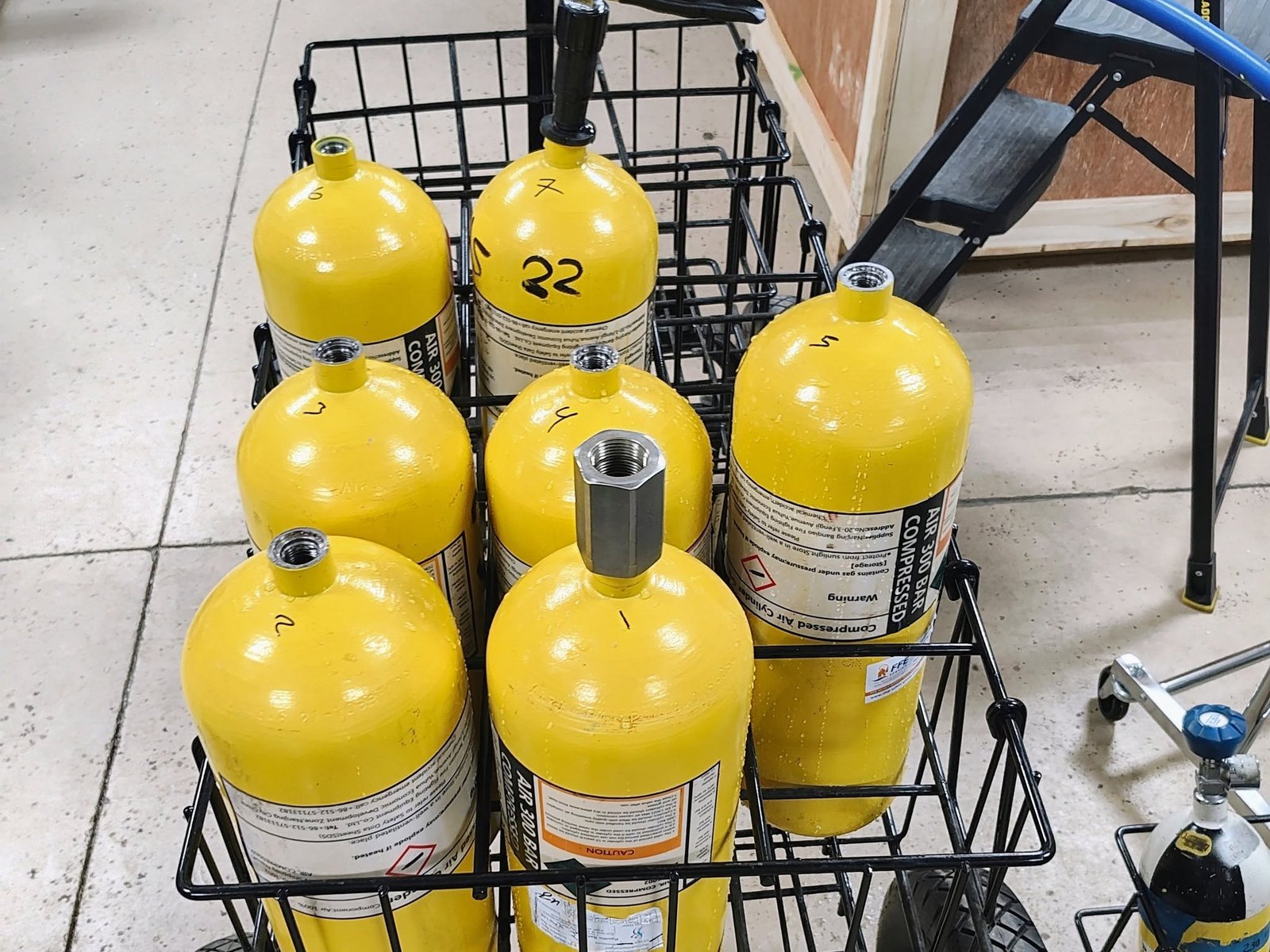
Because the annual check is defined by the manufacturer, what it involves depends on the make and model. It typically covers the condition of the case and seals, the hood or face piece, the cylinder and its gauge, and the shelf life and service dates printed on the unit. A compressed-air EEBD has a cylinder, and the maker sets how often that cylinder needs testing or replacement. Read the label and the manual for each model on board rather than applying one rule to all of them, and keep the result in the maintenance records.
Do not confuse EEBDs with SCBA cylinders here. Paragraph 9.4 of Circ.1432 requires five-year hydrostatic testing of steel self-contained breathing apparatus cylinders. That item is about SCBA. EEBD cylinder testing follows the EEBD manufacturer.
What fails on a walk-through
EEBD problems are rarely about the device design. They are about upkeep, and most of them can be seen without opening anything:
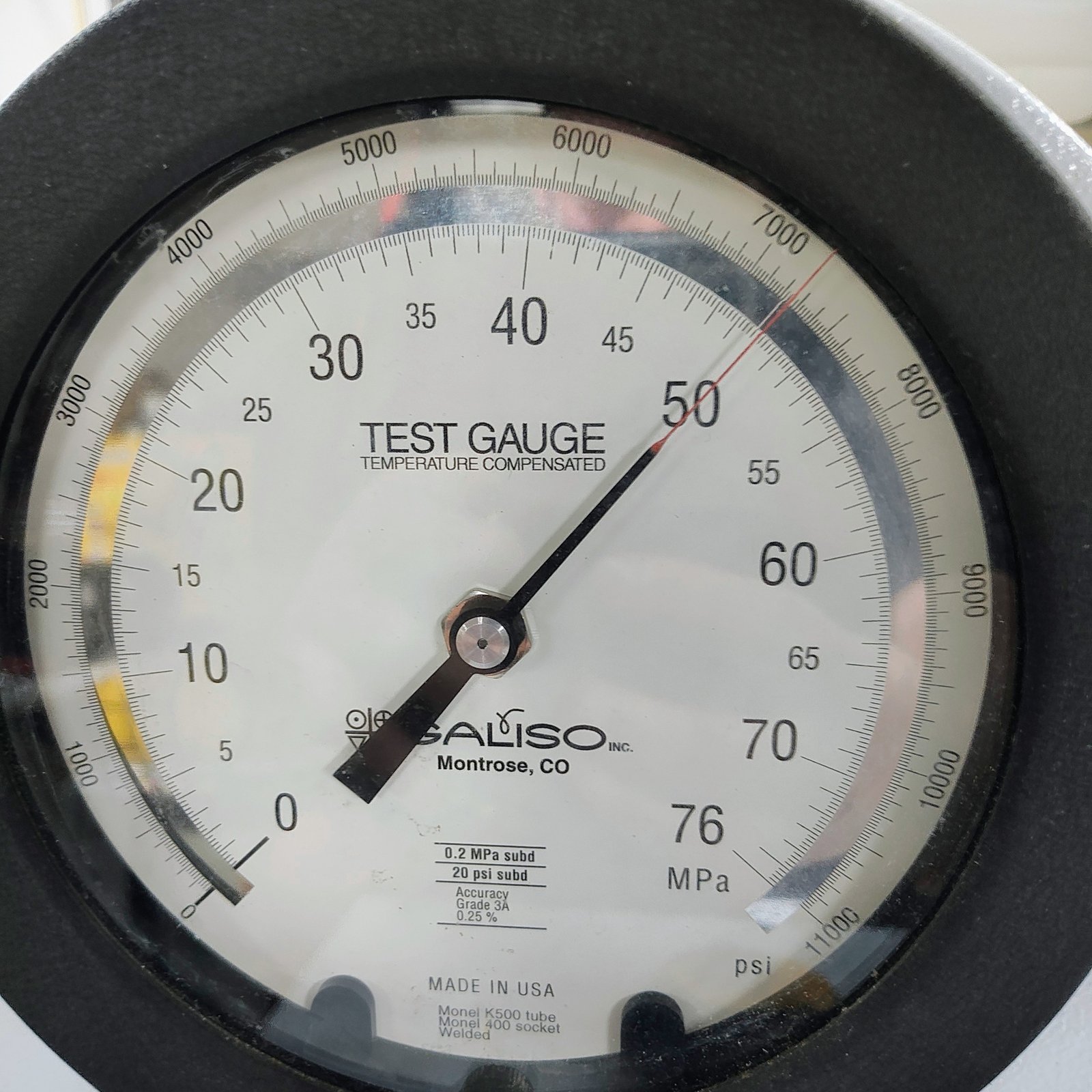
- Gauge out of range. A needle below the green band means the unit may not deliver its rated duration. This is exactly what the weekly check is meant to catch.
- Fire control plan does not match. An EEBD missing from a position shown on the plan, or a unit stowed somewhere the plan does not show, under regulation 13.4.3.2.
- Expired or unreadable labels. Circ.849 requires the shelf life and manufacture date on each unit. If the label has worn off or the date has passed, the unit has no evidence that it is still in service life.
- Training units mixed in with live units. Circ.849 paragraph 6.2 says all EEBD training units "should be clearly marked." An unmarked trainer in an engine room position is a real hazard, not a paperwork issue.
- No spares, or spares that are also expired. SOLAS requires spares, and the flag sets how many.
- Damaged cases and broken seals. A cracked case, a torn bag or a broken tamper seal suggests the unit may have been opened or knocked around, and it should be checked against the maker's instructions before it goes back in position.
- No annual check on record. If the maintenance plan lists EEBDs but there is no record of the annual check, the plan exists on paper only.
Training and drills
Circ.849 treats EEBD use as part of basic safety training and says personnel "should be trained to immediately don an EEBD prior to exiting a space when the atmosphere becomes life threatening," through routine escape drills for crew who work in the machinery spaces. It also notes that an EEBD may be used to escape a machinery space after an accidental release of a fixed CO2 system. That is a good reason to run an EEBD donning drill alongside your CO2 release alarm drill. Our Baltimore Port State Control fixed CO2 guide covers the CO2 side of that preparation.
Use marked training units for drills. Using a live unit for practice and putting it back in position is one of the quickest ways to end up with an EEBD that will not work when it is needed.
A short EEBD checklist before a port call
- Count the EEBDs in the accommodation and compare against SOLAS II-2/13.3.4 (and the passenger ship zone rules if they apply).
- Walk the engine room with the fire control plan and confirm every EEBD position shown on the plan has a unit in it, including the engine control room, workshop and each platform level near the escape ladder.
- Check every gauge is in the correct pressure range.
- Read the shelf life and manufacture date on each unit and note any coming due.
- Confirm the spares are on board, in date, and match your flag's requirement.
- Confirm training units are clearly marked and stowed apart from live units.
- Have the latest annual check record ready, along with any flag notice that adds to the SOLAS baseline.
Baltimore Marine Safety is class approved by ABS, DNV-GL, Bureau Veritas, ClassNK, Lloyd's Register and RINA, and provides EEBD inspection and certification along with SCBA testing, cylinder hydrostatic testing and breathing air compressor analysis. We work on vessels throughout Maryland, Pennsylvania, Delaware, New Jersey, New York and Virginia. If your EEBDs are coming due, or you want a second set of eyes on the engine room before a survey, send us your vessel details.
Note: This article summarizes IMO requirements and guidance for general information. Vessel requirements depend on flag, class, vessel type, route and the equipment fitted. Always follow your flag administration, class society, the USCG and the equipment manufacturer.
References
- SOLAS chapter II-2, regulation 13, Means of escape (paragraphs 3.4 and 4.3)
- IMO MSC/Circ.849, Guidelines for the Performance, Location, Use and Care of Emergency Escape Breathing Devices (EEBDs)
- IMO MSC/Circ.1081, Unified interpretation of SOLAS regulations II-2/13.3.4 and II-2/13.4.3
- IMO MSC.1/Circ.1432, Revised Guidelines for the Maintenance and Inspection of Fire Protection Systems and Appliances
- ClassNK, Emergency Escape Breathing Device (EEBD): special requirements by flag